Engineering Case Studies | Dave Lim
Backend architecture and distributed system case studies demonstrating scalable TypeScript/Node.js design, event-driven processing, and production-grade engineering discipline.
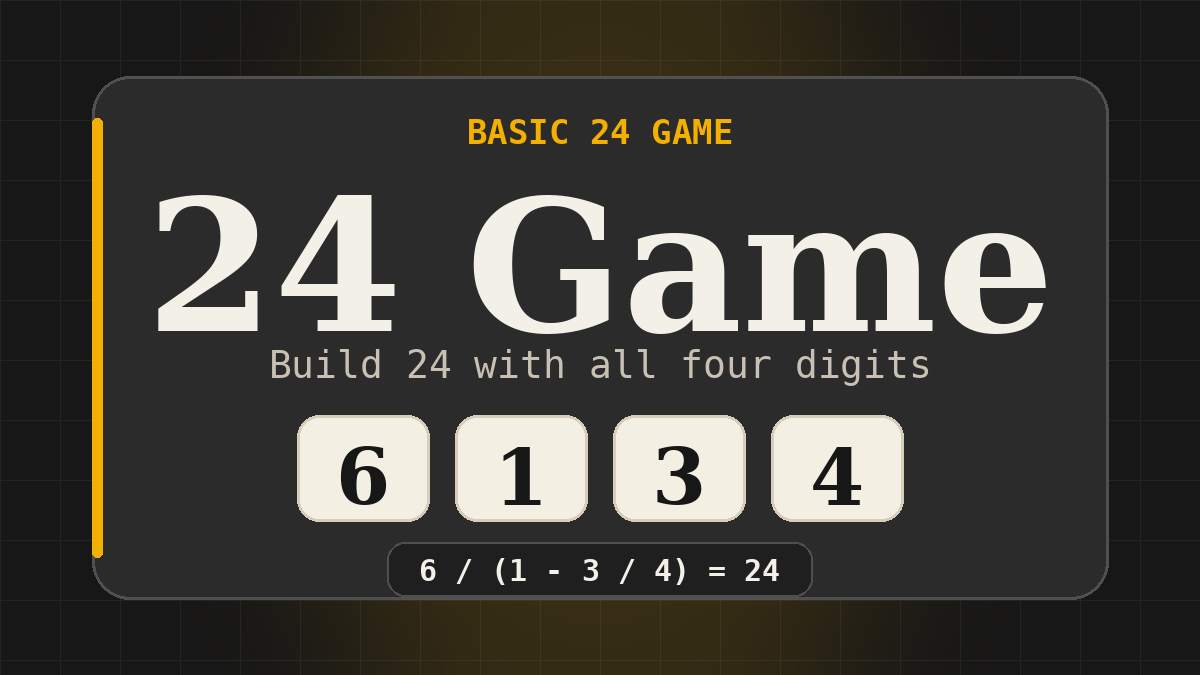
24 Game
A TypeScript arithmetic puzzle that validates formulas against four given digits and explains how each result is reached, instead of only returning true or false. It started as a pure validation engine before growing into a Vite frontend with Vitest coverage and fair random challenges that only generate solvable digit sets.

Laughnya – Humor & Community Platform
A community-driven humor platform designed to collect and share hilarious stories inspired by history, culture, and everyday life. Built as a scalable content platform with support for user submissions, threaded discussions, reactions (likes/dislikes), and community groups. The system is designed with flexible schema modeling, moderation workflows, and engagement tracking to support large-scale social interaction.
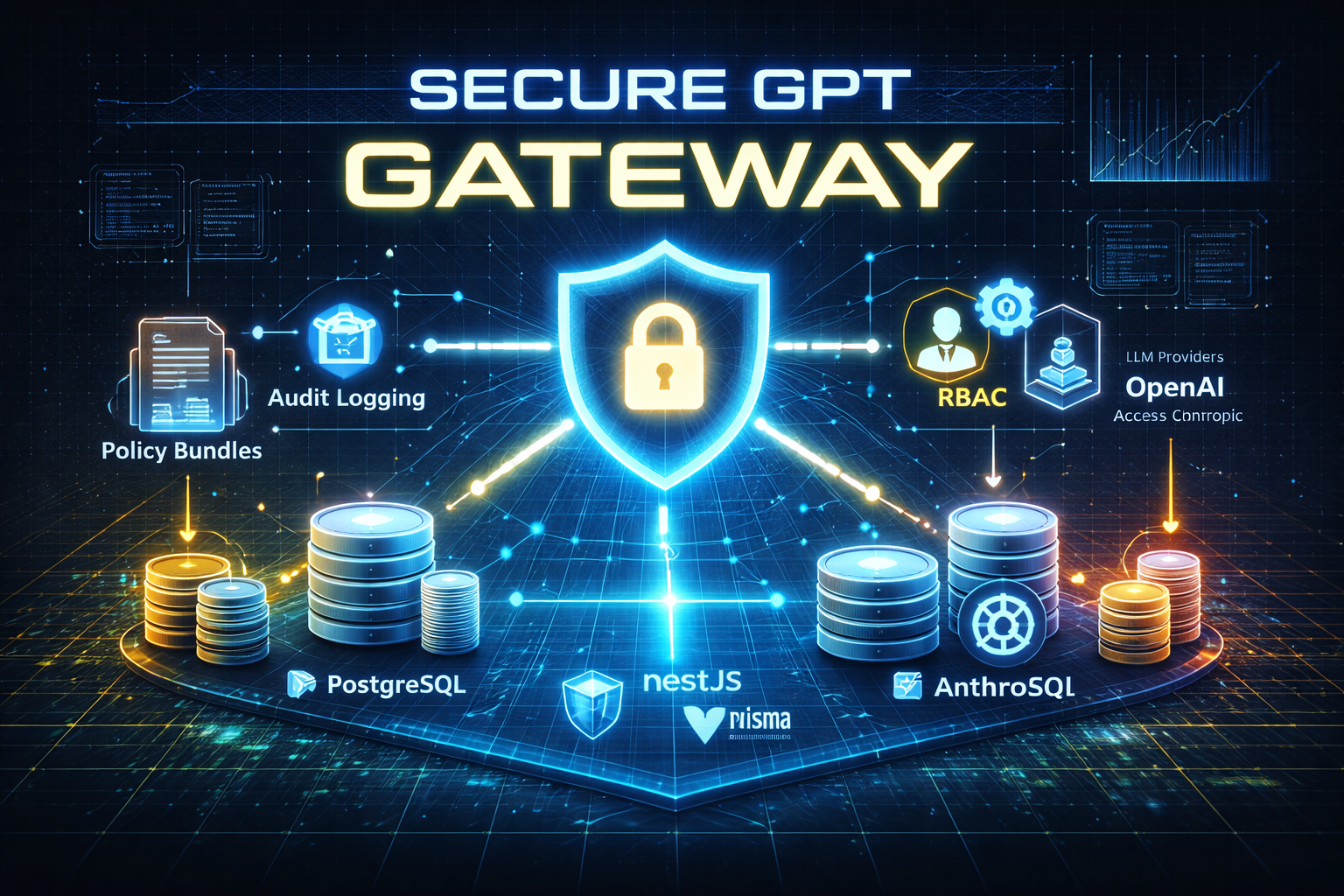
Secure GPT Gateway — AI Governance Control Plane
Private-source AI governance control-plane showcase for routing LLM requests through deterministic policy checks, redaction, audit logging, and provider abstraction. Includes a public case-study repository and demo portal showing policy decisions, reason codes, correlation IDs, and redacted responses without exposing backend implementation code.
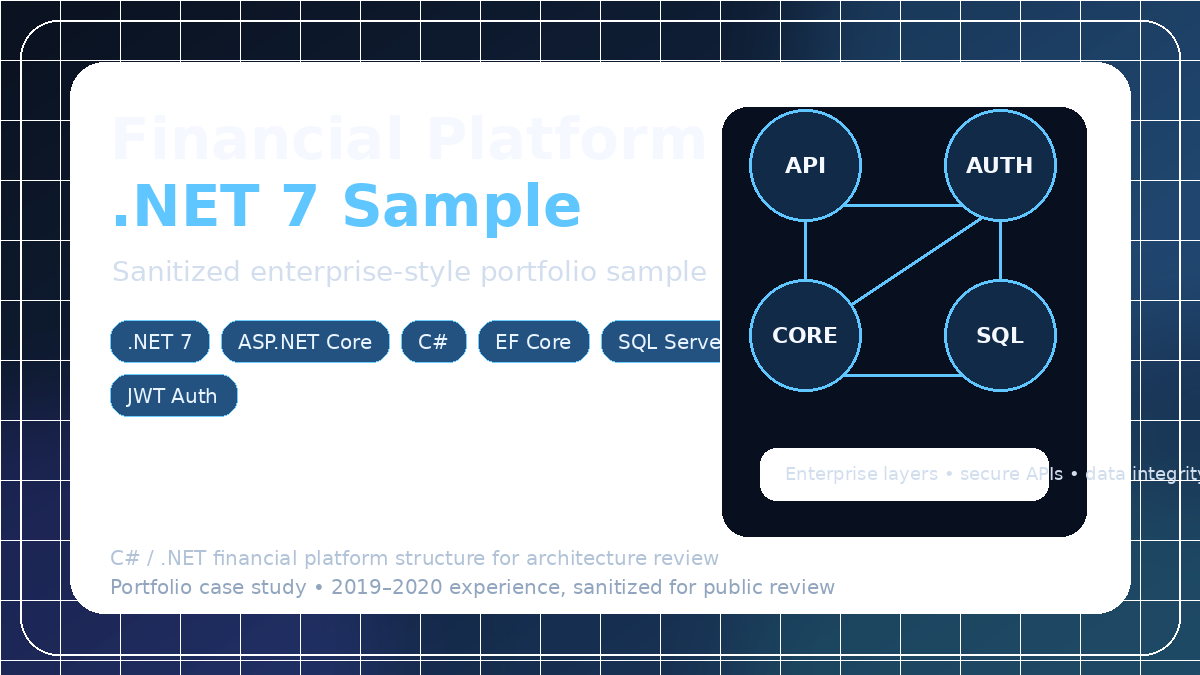
Financial Platform .NET 7 Sample
A sanitized portfolio sample derived from enterprise financial platform development experience between 2019 and 2020. Demonstrates a multi-project .NET 7 solution with application, API, shared-core, and UI layers, reflecting enterprise-style backend organization, authentication, database access, and maintainable application structure. Sensitive business names, credentials, domains, and production-specific details have been removed or generalized for safe public review.

Commission Rule Engine (In Development)
A configurable financial calculation engine modeling hierarchical payouts, rank qualification, and deterministic cut-off processing. Designed with modular rule sequencing, idempotent batch execution, and audit-ready payout generation to simulate production-grade settlement systems.
XP Queue System
An event-driven backend service engineered to process high-volume activity streams and distribute XP deterministically at scale. Implements idempotent consumers, delayed retries, sharding strategies, and Dead Letter Queue (DLQ) handling to maintain throughput stability under burst traffic. Designed with message durability, back-pressure awareness, and failure isolation to simulate production-grade distributed processing patterns.
People Tap Game
A production-grade backend platform featuring real-time XP accrual, active/idle income mechanics, skill trees, quest systems, and competitive leaderboards. Designed to validate event-driven pipelines, ranking recalculation strategies, and data consistency under concurrent writes. Emphasizes deterministic state transitions, eventual consistency trade-offs, and scalable progression modeling for high-engagement systems.

Block Blast-Inspired Mobile Game
A mobile game prototype exploring rankings, virtual economy, and reward loops. Used as a sandbox for system design experiments around leaderboards, event tracking, and scalable backend integration.